
Solar systems for domestic hot water
A solar thermal system uses the sun’s heat to warm the water in the house. It does not produce electricity but thermal energy, and the aim is to reduce the energy needed for domestic hot water. It suits households with a steady use of hot water in particular.
Solar thermal or photovoltaic
Photovoltaic panels produce electricity; solar thermal collectors produce heat. The two technologies do not replace each other; they meet different needs. If you want to reduce the electricity used in the house, you start from photovoltaic panels; if your main consumption is hot water, a solar thermal system may be suitable. The comparison is set out in detail in the article photovoltaic panels vs solar thermal panels.
How a solar thermal system works
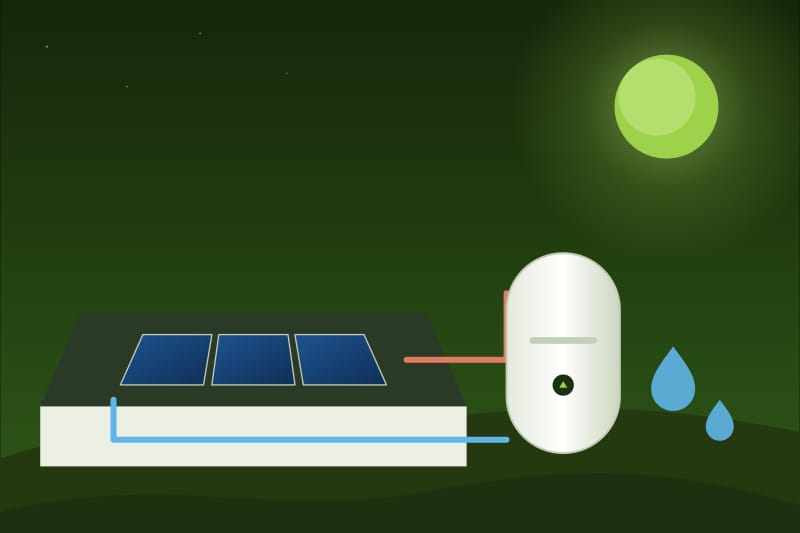
The collectors absorb solar radiation and heat a fluid that circulates through a coil in the hot water tank, known as a solar cylinder. A pump station with sensors and a controller starts the circulation only when the collector is warmer than the water in the cylinder. A closed circuit uses a heat-transfer fluid with frost protection.
The main components
- the collectors: flat-plate or evacuated-tube;
- the solar cylinder (the storage tank) with one or two coils;
- the pump station and the controller;
- the expansion vessel, the safety valves and the insulated pipework;
- the additional heat source, for example a boiler or an electric immersion heater.
Performance through the seasons
In summer, a well-sized system can provide a significant share of the hot water you need. In winter and in cloudy periods its contribution is smaller, and the water still has to be heated by the existing source. Sizing for summer without a suitable backup source, or without a way of dealing with excess heat, can cause problems, which is why the design takes the whole year into account.
Integration with existing heating
The solar system is connected to the boiler, to an electric water heater or to another heating system through the cylinder’s additional coil. We check the space for the tank, the position of the collectors and the pipe route, and the final solution is designed to work properly with what you already have.
Uses in homes and smallholdings
Solar thermal systems are used in houses with a steady use of hot water, small guesthouses, farms and workshops with a shower for staff. The number of people, the pattern of use and the space available are all taken into account.
Maintenance
Periodic checks of the circuit pressure, the heat-transfer fluid, the valves and the pipe insulation are recommended. The collectors rarely need cleaning. The checks can be carried out by a qualified installer.
See also
Useful articles
Frequently asked questions
What is the difference between photovoltaic panels and solar thermal panels?
Photovoltaic panels produce electricity; solar thermal panels produce heat for water. They are different technologies with different purposes.
Does a solar thermal system work in winter?
Yes, but its contribution is smaller; the existing heat source has to make up the rest.
What is a solar cylinder?
It is a hot water tank with a coil through which the fluid heated by the collectors circulates, sometimes with a second coil or an immersion heater for the additional heat source.
Can it be integrated with my boiler?
Usually yes, but it depends on the type of boiler and on the existing installation. We check this during the assessment.
Shall we talk about your project?
Tell us your town and roughly how much you use. We will suggest the next steps.